Compromised UpdraftCentral Keys – WordPress Site Attacks
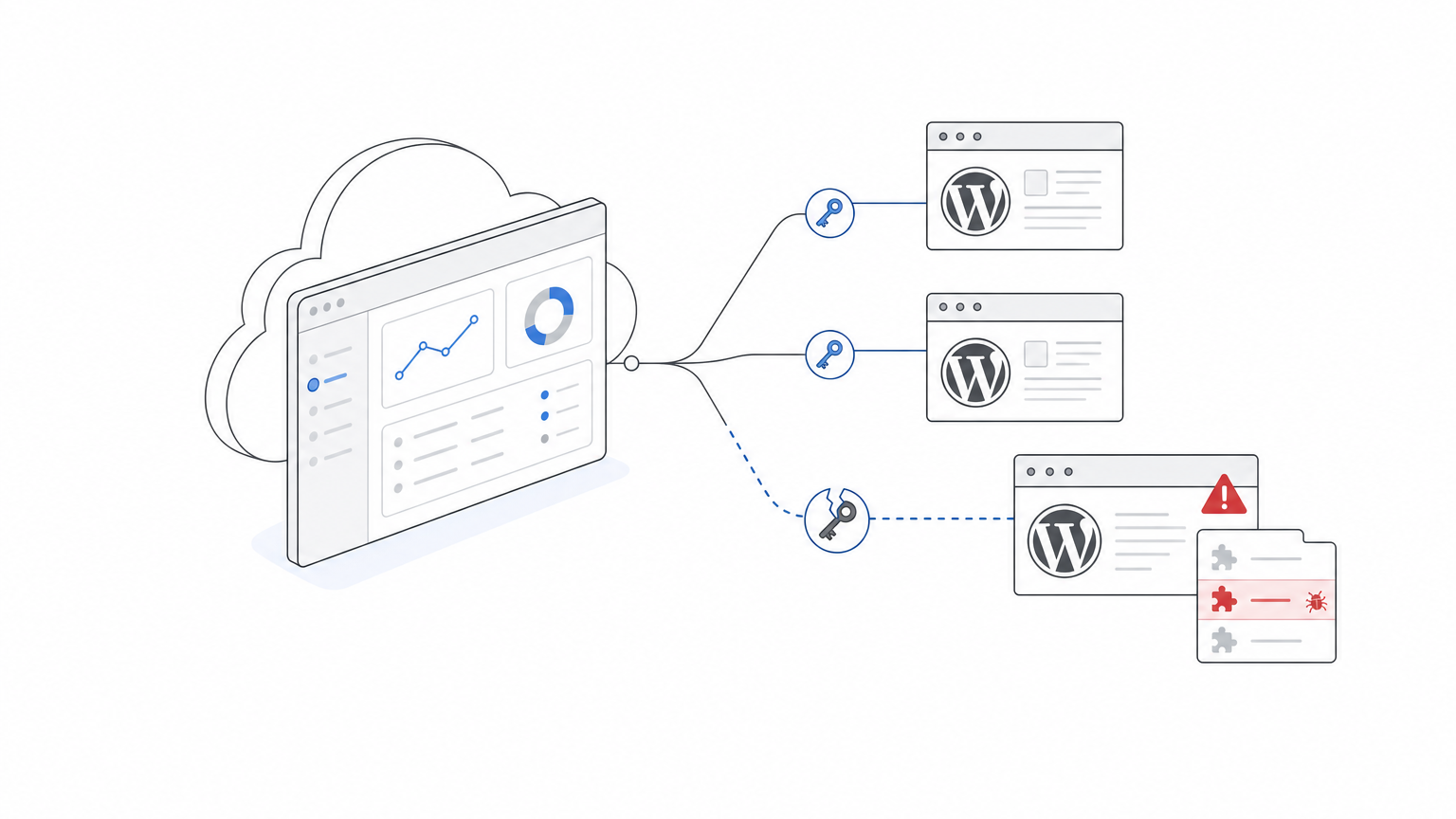
In October 2026, CERT Polska (Poland’s national Computer Emergency Response Team) reported a security incident involving the UpdraftCentral Cloud service. Compromised access keys for this service are being used to attack WordPress sites with the UpdraftPlus plugin installed. Attackers can remotely install unauthorized plugins and create user accounts, gaining broad administrative privileges. Administrators should immediately check if their sites are at risk and implement the recommended security measures.
Compromised UpdraftCentral keys – threat mechanism
UpdraftCentral allows remote management of multiple WordPress installations from a single cloud console. Access relies on API keys that enable administrative operations. According to CERT Polska, the incident resulted in leaked keys that allow attackers to take control of sites with the active UpdraftPlus plugin. Attackers can install unauthorized plugins and create user accounts with high privileges, using the permissions of the compromised key.
Some plugins installed in this way may be invisible in the WordPress admin panel if added as so-called mu-plugins. Access gained via the key does not appear in standard login logs.
How to detect traces of attack via compromised UpdraftCentral keys
Simply removing the site from the UpdraftCentral panel is not enough – compromised keys remain active. CERT Polska recommends immediately updating the UpdraftPlus plugin to version 1.26.13 (free) or 2.26.13 (Premium), which invalidate the leaked keys.
Verification should include:
- Presence of unknown user accounts, such as Site Tools, media.ops12, page_ops41, content.desk38, email addresses in the example.com domain, or editor accounts with the manage_options privilege.
- Presence of unknown plugins, especially mu-plugins. It is recommended to check the wp-content/plugins/ directory at the file system level, for example with the command:
grep -rl "Small maintenance toolkit: keeps option storage tidy." /var/www/*/wp-content/plugins/ - Requests from IP addresses: 43.250.53.42 and 2a09:bac5:4e21:2e3c::49b:9.
- Entries in UpdraftPlus logs containing the phrase Command received: plugin.upload_plugin and requests in web server logs where the User-Agent contains class-udrpc.php.
- Unexpected site failures (e.g. error 500) in recent times.
The absence of these traces does not guarantee that the site was not targeted. Attackers may hide their actions or delete logs.
What to do after detecting a WordPress site compromise
If you confirm a breach or notice suspicious symptoms, CERT Polska recommends restoring the site from a backup made before 17 October 2026, changing all passwords, and thoroughly reviewing files and permissions on the server.
How BOIT can help
BOIT can conduct a WordPress security review, check for compromised keys and attack traces, and update plugins to secure versions. We also assist with post-incident recovery, including restoring backups and verifying the file system. Contact us for support.
For up-to-date threat information and practical guides, visit the BOIT blog.
Sources and further reading
- Announcement by CERT Polska, 27.10.2026, moje.cert.pl
- Security incident – October 2026, teamupdraft.com
- UpdraftCentral Key Compromise: WordPress Backdoors, patchstack.com
